

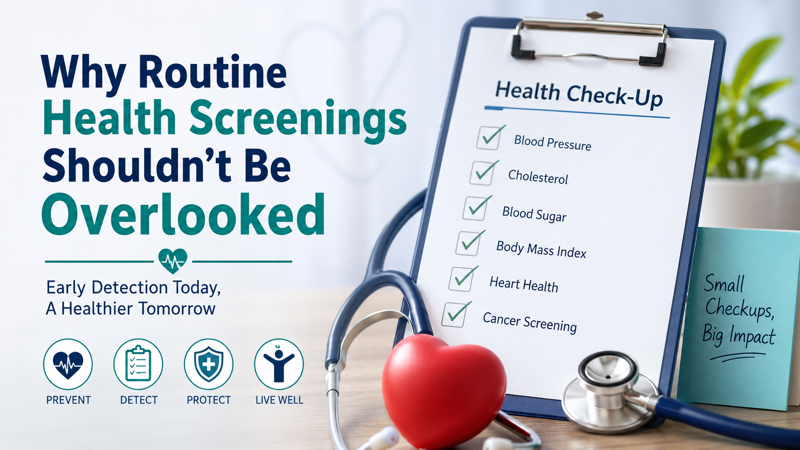
Why Routine Health Screenings Shouldn’t Be Overlooked helps you understand the benefits of preventive care, early detection, and healthier living.
Routine health screenings help detect health problems early, often before symptoms appear. Regular checkups improve treatment success, reduce healthcare costs, and help you maintain better long-term health through preventive care and personalized medical guidance.
When was the last time you visited a doctor even though you felt completely healthy? If your answer is “I can’t remember,” you’re not alone. Many people wait until they feel sick before scheduling a medical appointment. Unfortunately, by that time, some health conditions may have already progressed.
Routine health screenings are one of the simplest ways to protect your health. They help identify hidden medical issues before they become serious problems. Whether you’re in your 20s or your 70s, preventive care plays a vital role in keeping you healthy, active, and confident about your future.
Many people believe that feeling healthy means they are healthy. However, conditions like high blood pressure, diabetes, high cholesterol, and certain cancers often develop silently. Regular screenings allow your healthcare provider to detect these conditions early and recommend the right treatment before complications arise.
Every preventive visit also gives you the opportunity to discuss lifestyle habits, nutrition, mental health, vaccinations, and family medical history. Together, these small steps create a strong foundation for lifelong wellness. 🌿
Regular visits with a Primary Care Physician are one of the best ways to stay ahead of potential health problems. A trusted provider monitors your overall health, tracks changes over time, and recommends screenings based on your age, medical history, and lifestyle. RescueMD Primary Care focuses on personalized preventive care, helping patients build long-term relationships with experienced healthcare professionals who understand their unique health needs.
Choosing RescueMD Primary Care means receiving comprehensive medical care rather than simply treating illnesses when they appear. Preventive checkups, chronic disease management, health counseling, and routine screenings work together to improve long-term wellness. Having one healthcare provider coordinate your care also leads to better communication, faster diagnoses, and improved health outcomes.
🩺 What Are Routine Health Screenings?
Routine health screenings are medical tests that evaluate your overall health before symptoms appear. These screenings identify risk factors and detect diseases in their earliest stages. Early diagnosis often leads to easier treatment and better recovery.
Healthcare providers recommend different screenings based on your age, gender, family history, and lifestyle. Some tests are performed every year, while others are recommended every few years. Your doctor creates a screening schedule tailored specifically to your health needs.
Common preventive screenings include blood pressure checks, cholesterol testing, blood sugar testing, cancer screenings, vision exams, hearing evaluations, and routine physical examinations. These tests provide valuable information about your body’s current condition.
| Common Screening | Purpose | Recommended Frequency |
| Blood Pressure | Detect hypertension | Every year |
| Blood Sugar | Screen for diabetes | Every 1–3 years |
| Cholesterol | Check heart disease risk | Every 4–6 years |
| BMI Assessment | Monitor healthy weight | Every visit |
| Vision Exam | Detect eye conditions | Every 1–2 years |
❤️ Why Early Detection Saves Lives
Many serious illnesses begin without noticeable symptoms. High blood pressure rarely causes warning signs until complications develop. Diabetes may damage organs long before patients realize they have it. Some cancers grow silently for years.
Routine screenings help doctors detect these problems before permanent damage occurs. Earlier diagnosis usually means more treatment options, fewer complications, and lower healthcare costs. It also improves survival rates for many diseases.
Studies consistently show that preventive healthcare leads to healthier lives. Patients who receive recommended screenings often experience better treatment outcomes than those diagnosed after symptoms appear.
🔍 Diseases That Screenings Can Detect Early
Routine screenings identify many common health conditions before they become severe. This gives patients valuable time to make lifestyle changes or begin treatment immediately.
Some conditions commonly found through preventive screenings include:
- High blood pressure
- High cholesterol
- Type 2 diabetes
- Heart disease
- Osteoporosis
- Breast cancer
- Cervical cancer
- Colorectal cancer
- Prostate conditions
- Kidney disease
Early diagnosis often reduces hospitalizations and prevents long-term complications. That’s why preventive care remains one of the smartest healthcare investments anyone can make.
👨⚕️ The Role Of Your Primary Care Physician
Your primary care physician serves as your long-term healthcare partner. Instead of focusing on one illness, they monitor your complete health picture over many years. This ongoing relationship helps identify subtle health changes that may otherwise go unnoticed.
Primary care physicians also coordinate specialist referrals when needed. They review your medical history, medications, vaccinations, and family health risks during every visit. This comprehensive approach improves healthcare quality and reduces unnecessary testing.
Beyond diagnosing illnesses, primary care providers offer guidance on nutrition, exercise, stress management, sleep, and preventive vaccinations. These conversations can dramatically improve your overall well-being.
📅 Which Screenings Are Recommended By Age?
Screening recommendations change throughout life. Children, adults, and seniors all have different healthcare needs. Your doctor considers several factors before recommending specific tests.
| Age Group | Recommended Screenings |
| 18–39 | Blood pressure, cholesterol, diabetes risk, STI screening |
| 40–59 | Heart health, diabetes, colorectal screening, eye exams |
| 60+ | Bone density, hearing, vision, cancer screenings, memory evaluation |
Family history may require earlier or more frequent testing. Individuals with higher risk factors often need customized screening schedules.
🍎 Lifestyle Choices Affect Screening Results
Healthy habits work together with preventive screenings. Screening results provide valuable feedback about how your daily choices affect your health. Small improvements today often prevent major illnesses tomorrow.
Consider incorporating these healthy habits:
- Eat more fruits and vegetables 🥗
- Exercise at least 150 minutes weekly
- Sleep 7–9 hours nightly
- Avoid tobacco products
- Limit alcohol intake
- Maintain a healthy weight
- Manage stress effectively
Routine screenings help measure the success of these lifestyle improvements over time.
💙 Routine Screenings Help Prevent Chronic Disease
Chronic diseases account for many healthcare visits each year. Fortunately, many are preventable through early detection and healthy lifestyle changes.
Conditions like hypertension, diabetes, and high cholesterol often develop gradually. Preventive screenings allow doctors to intervene before permanent damage occurs. Early treatment also reduces medication needs for many patients.
Managing risk factors early protects your heart, kidneys, brain, and other vital organs. Prevention always remains easier than treating advanced disease.
| Health Risk | Early Screening Benefit | Possible Prevention |
| High Blood Pressure | Earlier treatment | Stroke prevention |
| Diabetes | Blood sugar control | Kidney protection |
| High Cholesterol | Lower heart risk | Heart attack prevention |
| Colon Cancer | Remove precancerous polyps | Cancer prevention |
💰 Preventive Care Saves Money
Many people avoid doctor visits because they worry about healthcare costs. However, preventive care usually costs far less than emergency treatment or hospitalization.
Treating advanced disease often requires expensive medications, surgeries, and lengthy hospital stays. Detecting illness early typically reduces these costs significantly.
Preventive healthcare also minimizes missed workdays, improves productivity, and supports better quality of life. Investing in routine screenings today can prevent much larger expenses later.
🧠 Mental Health Screenings Matter Too
Health isn’t only physical. Mental health plays an equally important role in overall wellness. Anxiety, depression, stress, and sleep disorders affect millions of adults each year.
Routine wellness visits often include mental health assessments. These conversations help identify emotional concerns early. Early support improves relationships, productivity, and overall happiness.
Never hesitate to discuss emotional well-being with your healthcare provider. Mental health deserves the same attention as physical health. 💚
📋 How To Prepare For A Health Screening
Preparing before your appointment helps ensure accurate results. It also allows you to make the most of your visit with your healthcare provider.
Before your appointment:
- Write down current medications.
- Gather family medical history.
- List any symptoms or concerns.
- Follow fasting instructions if required.
- Prepare questions for your doctor.
Being organized helps your physician provide more personalized recommendations.
🌟 Building A Lifetime Of Healthy Habits
Routine screenings are only one part of preventive healthcare. Building healthy daily habits creates lasting protection against chronic disease. Every positive choice adds up over time.
Schedule annual wellness visits, stay physically active, eat balanced meals, manage stress, and follow your physician’s recommendations. Small consistent actions produce significant long-term benefits.
Remember, good health isn’t about perfection. It’s about making informed decisions that support your body every day.
✅ Conclusion
Routine health screenings should never be overlooked because they provide one of the most effective ways to protect your long-term health. Early detection leads to better treatment, lower healthcare costs, and improved quality of life. Working closely with a trusted primary care physician helps you stay ahead of potential health concerns while creating a personalized prevention plan. Whether you’re feeling perfectly healthy or managing chronic conditions, regular screenings remain one of the smartest investments you can make for yourself and your future.
❓ Frequently Asked Questions
What routine health screenings should adults get yearly?
Most adults should receive annual blood pressure checks, physical exams, weight assessments, and routine preventive evaluations. Additional screenings depend on age and health risks. Your primary care physician can recommend a personalized schedule.
How often should I visit a primary care physician?
Most healthy adults benefit from an annual wellness visit. Individuals with chronic conditions may require more frequent appointments. Your doctor will determine the right schedule based on your needs.
Can routine health screenings detect cancer early?
Yes. Many recommended screenings identify cancers before symptoms appear. Early detection often improves treatment success and increases survival rates.
Are preventive health screenings worth the cost?
Yes. Preventive screenings often reduce long-term healthcare expenses by detecting diseases early. They also lower the risk of expensive emergency treatments and hospitalizations.
Why shouldn’t healthy people skip screenings?
Feeling healthy doesn’t always mean you’re free from disease. Many serious conditions develop without noticeable symptoms. Regular screenings help detect these issues before they become serious.



Leave a Reply